

Average cost of residential solar keeps falling
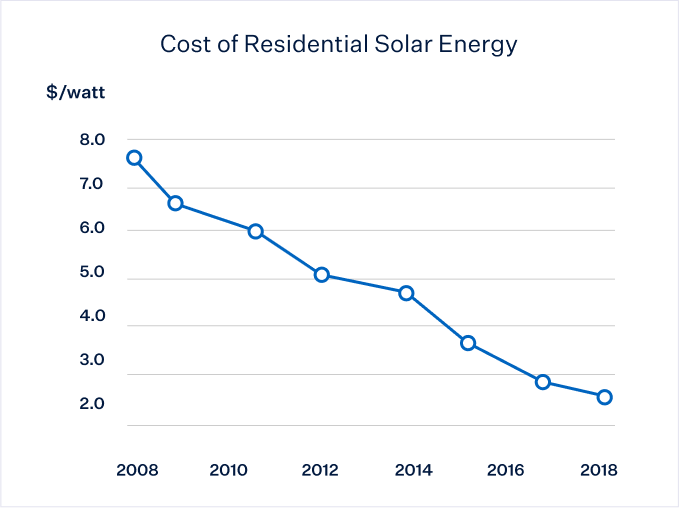
Solar panels are rapidly spreading over American rooftops. And as the cost of solar continues to fall, it’s no surprise that residential solar systems are installed every 100 seconds in the United States. Residential solar costs are at their lowest in over 30 years. More affordable than ever, today’s residential solar panels feature technology advances that maximize power production.
Average cost of residential solar keeps falling. Residential solar costs are at their lowest in over 30 years. More affordable than ever, today’s residential solar panels feature technology advances that maximize power production.
How much does the average solar system cost?
| System size | Capacity (kW) | Cost |
|---|---|---|
| Average | 4kW | $15,000 |
| Large | 8kW | $29,000 |
Note: ***The above numbers are national averages.
Main Components of Solar PV Module
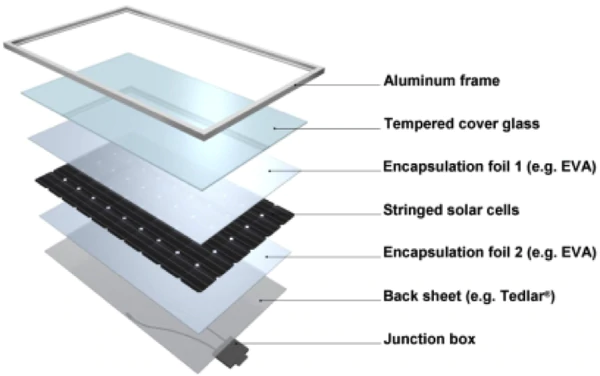
Few years ago, the primary source of energy was coal, wood and biomass, and renewable energy was secondary. Now, the energy sources replace by renewable energy, such as solar energy, hydro & wind power. Solar energy is free and green energy which gets from the sun light at free of cost every day. Solar PV Module converts sun energy into electricity during the day. In this latest write up, you will learn about the main components of solar plates and in the last write up, you learn about the solar panel manufacturing process.
1. Solar Cells
Solar cells are the building blocks of solar panels. Thousands of cells come together to form a solar panel. These Solar Cells are stringed together to make Solar Panels which involves soldering, encapsulating, mounting them on a metal frame, testing etc. The efficiency of a solar panel is directly proportionate to that of solar cells. The cost and efficiency of solar cells influence the overall performance of the solar panel. Solar Cell Efficiencies have improved continuously over the past decade.
2. Solar Glass
Solar Glass is another important component of a solar panel. It is the outer most layer on the solar panel and has to be sturdy and shiny for better performance of the panel. The main function of solar glass is to protect the solar cells from harsh weather, dirt and dust. It is recommended to use tempered glass with 3mm – 4mmm thickness.
3. EVA
The EVA sheet or the ‘ethylene vinyl acetate’ is a highly transparent (plastic) layer used to encapsulate the cells. It provides laminated layering on top of the cells to hold them together. It should be durable as well as tolerant to withstand extreme temperatures and humidity.
4. Back Sheet
Backsheet is the rear-most layer of the panel providing both mechanical protection and electrical insulation. It is essentially a protective layer.
5. Aluminum Frame
The aluminum frame is also a crucial component as it provides structural strength to the panel. It is recommended to use a frame made of strong but lightweight material. It should be stiff and able to withstand extreme conditions like high wind and external forces. It generally comes in two makes – silver and anodised black.
It's a Great Time for Solar
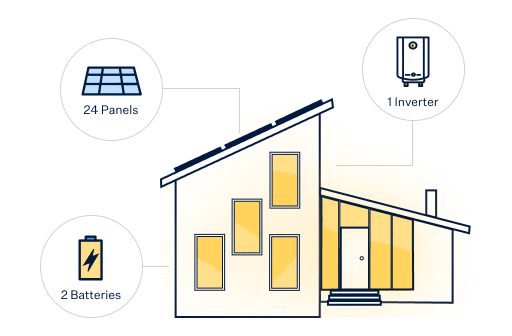
Find the ideal system and battery
Get your costs to make the switch
Check your potential savings
Learn about solar incentives
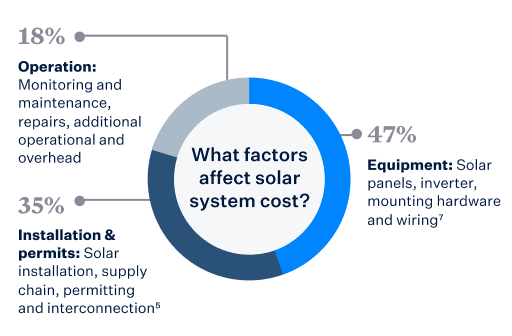
What factors affect solar system cost?
A single solar panel costs between $2.67 and $3.43 to buy and install. The price of the whole system is based on its capacity, measured in watts. How big a system you need will be based on how much energy you use, your roof’s sunlight exposure and panel efficiency.
The amount you save will rely on several factors, including:
- Region’s sunlight exposure
- Cost of solar system (including battery, where available)
- Cost of electricity
- Energy use
- Local rebates and incentives
The average payback period for a residential solar system is between six to nine years, depending on the cost of your system, incentives and savings from your energy bill.
Maintenance
Maintenance of solar panels ranges from routine cleaning to major repairs. On average, households pay $150 for one solar panel cleaning. Companies charge between $3 to $10 per panel based on roof slant, home height and system size. Some firms charge a flat rate fee for a system cleaning. If you clean your system twice a year, as recommended, you can expect an annual bill of about $300.
If your system is damaged, you may incur additional expenses. Repairs to your system will include the prices of equipment and labor. Labor is typically priced at $100 per hour. Materials for solar repairs could be as little as $180 but may also be greater than $1,000. Your combined, total bill may range from $200 to $3,000.
The four most common types of damage to a home solar system and the costs of repairs area:
| Category | Cost Breakdown |
|---|---|
| Broken glass panel | $20 – $350, plus labor |
| Cracked panel | $100 – $400+ |
| Loose connection | $100+ |
| Replacement inverter | $100 – $2,500 |
Like cleaning costs, the amount you pay for repairs is affected by things like roof steepness, system type and system size. And if your panels have extensive damage, it may be cheaper to replace them.
When you own your system, you are responsible for the cost of maintenance and repairs. Your warranty should cover specific system failures; contact your installer before you begin repairs. A Evolutionsolar lease, lets you save thousands of dollars in maintenance and repairs. You simply pay for the power, and we take care of the rest. Our comprehensive service package features the Evolutionsolar Guarantee, which includes best-in-class monitoring, free equipment replacement, and system repairs including parts and labor, and routine maintenance.
If you’re set on buying your own home solar system, you can also purchase our full-service package, Protection Plus. While the system is yours, we’ll give you the same comprehensive support that comes with our Evolutionsolar Guarantee.
Panel manufacturer
The price of your panels will depend on the manufacturer. Evolutionsolar partners with LG, a world leader in solar technology and panels. Striking the right balance between quality, efficiency and affordability, LG offers some of the best solar panels on the market today.
For a given manufacturer, higher efficiency panels cost more. The good news is that the highest efficiency panels aren’t always needed, especially if your roof gets plenty of sun.
The type of solar panel you choose will factor into the price of the system. But remember that if you decide to lease, you’ll be paying for the power rather than the panels. The cost of solar will come down to the amount of solar power you’re projected to use under your lease agreement.
Solar panel mount types
While solar panels are the main component of a solar system, how you mount the panels will also affect the cost. There are three mount types:
| Mount type | Cost | Description |
|---|---|---|
| Fix-amount | $10–$15 per mount | Fixed-amount are stationary and can’t be moved to capture more sunlight, making them less efficient than other mounts. However, they’re also the least expensive. In addition, states with consistent sunlight such as Arizona and California are the least affected by this. |
| Adjustable-amount | $50 per amount | Adjustable-mounts can be tilted to maximize solar energy production. This mount type can also lay your panels flat during a storm to avoid wind damage. While they’re more expensive than fixed mounts, adjustable-mounts might make the most sense for regions with more seasonal climates and less space to maximize energy production. |
| Tracking-amount | $500–$3,000 per amount | Tracking-amount follows the sun’s arch for maximum energy production. Even though they’re the most expensive, track-mounting could add 45% in energy production and might be worth considering based on your location. However, track mounting also requires more attention and will be much more costly to maintain. |
Incentives
Local incentives like tax credits, rebates, local electricity rates, net energy metering (NEM) and the direction of your roof can help shorten your solar panel payback period and maximize your savings.
Federal solar tax credits
The federal solar tax credit can reduce the purchase and installation costs of a new home solar system. Currently, the federal solar tax credit gives you a dollar-for-dollar reduction against your federal income tax equal to 26% of the final cost of solar energy systems as long as the home solar system is installed by December 31, 2022. Starting in 2023, the tax credit will step down to 22%. After 2023, the tax credit for residential solar ends.
In the meantime, you can apply for federal solar tax credits by filling out forms 5695 and 1040 on your tax returns. Evolutionsolar is always available to help you simplify the process. We will make sure that your bottom-line expenses come in the form of a low, predictable monthly payment. Learn more about federal solar incentives.
Local solar incentives
In addition to the federal solar tax credit, some states offer additional tax credits for installing home solar systems. These programs enable you to deduct a portion of your system’s cost from your state tax bill, similar to federal solar tax credit. Individual state may also offer solar rebates.
In the meantime, you can apply for federal solar tax credits by filling out forms 5695 and 1040 on your tax returns. Evolutionsolar is always available to help you simplify the process. We will make sure that your bottom-line expenses come in the form of a low, predictable monthly payment. Learn more about federal solar incentives.
Frequently Asked Questions
The up-front cost of a typical home installation ranges from $16,200 to $21,400. Your bottom line will also be determined by maintenance costs and tax credits and other incentives. Your net savings will vary by region and by the amount of electricity you use.
Solar panels need to be maintained over time. This includes periodic cleaning and repairs. It is recommended that panels be cleaned twice annually at an average cost of $150 per cleaning. Any needed repairs will add to the cost. The combined costs of equipment and labor can range from $200 to as much as $3,000.
When you own your system, you are responsible for the cost of maintenance and repairs. Alternatively, a Sunrun solar lease lets you only pay only for the power. We handle the maintenance ourselves so you don’t have to worry about it.
Tax credits and other incentives can help reduce your costs by thousands of dollars. The federal solar tax credit is one of the best solar incentives out there. Many states offer additional incentives that allow you to deduct a portion of your system’s cost from your state tax bill, similar to federal solar tax credit. Solar rebates are also available in some states.
Consult with a tax professional to understand the credits you’re eligible for. With Sunrun, you can also set it and forget it when you lock in 25 years of affordable solar power with just one upfront payment. From paperwork to installation to maintenance, we take care of the rest.
Why Evolutionsolar
Every home is different and your electricity demands are unique. Our experts are here to help you. Evolutionsolar designs, installs, finances, insures, monitors and maintains solar home solar systems, while families receive predictable pricing for 20 years or more. As the nation’s largest residential solar, battery storage and energy services company, we provide families with industry-leading service, products and financing options to be able to meet different peoples’ needs. Our solar leases offer the financial value and flexibility you deserve.
In the meantime, you can apply for federal solar tax credits by filling out forms 5695 and 1040 on your tax returns.17 Evolutionsolar is always available to help you simplify the process. We will make sure that your bottom-line expenses come in the form of a low, predictable monthly payment. Learn more about federal solar incentives.
